 US
US  EN
EN  FR
FR  ES
ES 

Low Carbon Spray Foam Insulation
RDH Building Science and Toronto Metropolitan University research highlights closed-cell spray polyurethane foam (ccSPF) insulation's role in embodied carbon reduction




READ THE STUDY
The carbon advantage of spray foam insulation
The RDH x TMU study examines how different insulation materials influence embodied carbon in full building assemblies. Its findings show where meaningful reductions can be achieved through smarter material choices and higher-performing systems, with closed-cell spray polyurethane foam (ccSPF) included as a high-efficiency option that can help reduce material use and lower embodied carbon across many assemblies.
embodied carbon
What is embodied carbon?
Embodied carbon refers to the greenhouse gas emissions from manufacturing, transporting and installing building materials. These emissions are locked in at the time of construction, before a building is operational.
Extraction of raw materials
Manufacturing of products
Transportation to site
Installation
End of life
Permanent within building

COMPARING INSULATION
Embodied carbon of common insulation types vs insulation thickness
Both open and closed-cell spray foams show lower embodied carbon per thickness than mineral wool boards and XPS, while still delivering strong thermal performance. Fiberglass and EPS fall lower overall, but vary in effectiveness per unit thickness.
Source: RDH Embodied Carbon – Elastochem / Honeywell Enclosures 2025

Why closed-cell spray foam supports lower embodied carbon
Material Efficiency
Higher R-value per inch means less material is needed to achieve performance targets.
Transportation
Achieves the same coverage as traditional insulation with less material and fewer deliveries.
Installation
A single spray-applied system simplifies installation and minimizes job-site waste.
Total Carbon
Material efficiency across the enclosure helps reduce the overall embodied carbon footprint.
Spray foam compared to mineral wool
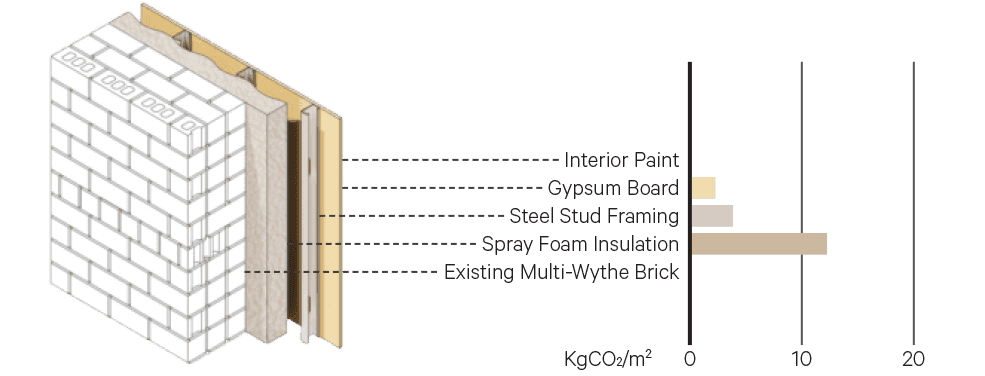
Comparing the carbon impact of two retrofit wall assemblies, both designed to achieve R-24
40% Lower Embodied Carbon
The ccSPF assembly showed approximately 40% lower embodied carbon than the mineral wool assembly.
Multiple Control Layers
ccSPF delivers thermal, air, and moisture control in a single material, reducing the need for additional layers.
Consider the Full Assembly
Embodied carbon is influenced not only by insulation but by the full wall assembly and required performance layers.
Source: RDH Embodied Carbon – Elastochem / Honeywell Enclosures 2025
Existing Masonry With Interior Mineral Wool Insulation

|
Phone
|
|
|---|---|
|
Embodied Carbon per m² of Enclosure
|
33.7 kg CO₂/m²
|
|
Effective R-Value of Enclosure
|
R-24 ft²·°F·h/BTU
|
Existing Masonry With Interior Spray Foam Insulation
|
Phone
|
|
|---|---|
|
Embodied Carbon per m² of Enclosure
|
19.2 kg CO₂/m²
|
|
Effective R-Value of Enclosure
|
R-24 ft²·°F·h/BTU
|
TRANSPORTATION IMPACT
Transportation is a carbon driver
Transportation is a major contributor to embodied carbon. Mixed and manufactured onsite from liquid isocyanate and resin components, one truckload of ccSPF can replace roughly five truckloads of board stock insulation. That means fewer deliveries, less fuel burned, lower site congestion, and reduced logistics emissions.
1 Truckload: Spray Foam
5 Truckloads: Board Stock
Calculation based on 53-ft transport truck carrying ~40 sets of ccSPF (≈4,500 bdft per set, ~180,000 bdft per truck) compared to 1 truckload of board stock at ~35,000 bdft.
SUSTAINABLE PERFORMANCE
Lower environmental impact with ccSPF
Thermal, Air and Vapour Barrier
One application delivers a system of thermal performance, airtightness and vapour protection
Low-GWP Chemistry
Formulated with HFO blowing agents that significantly lower Global Warming impact
Recycled Content
Insulthane Extreme ccSPF can repurpose ~6,000 plastic bottles in the average home.
Fewer Truckloads
Spray-application and integrated material reduces delivery volumes and fuel consumption
Thermal Performance
Highest R-Value per inch compared to traditional fiberglass and boardstock materials
Lower Carbon from the Start
Embodied carbon reductions begin long before the building is occupied.
REPORT
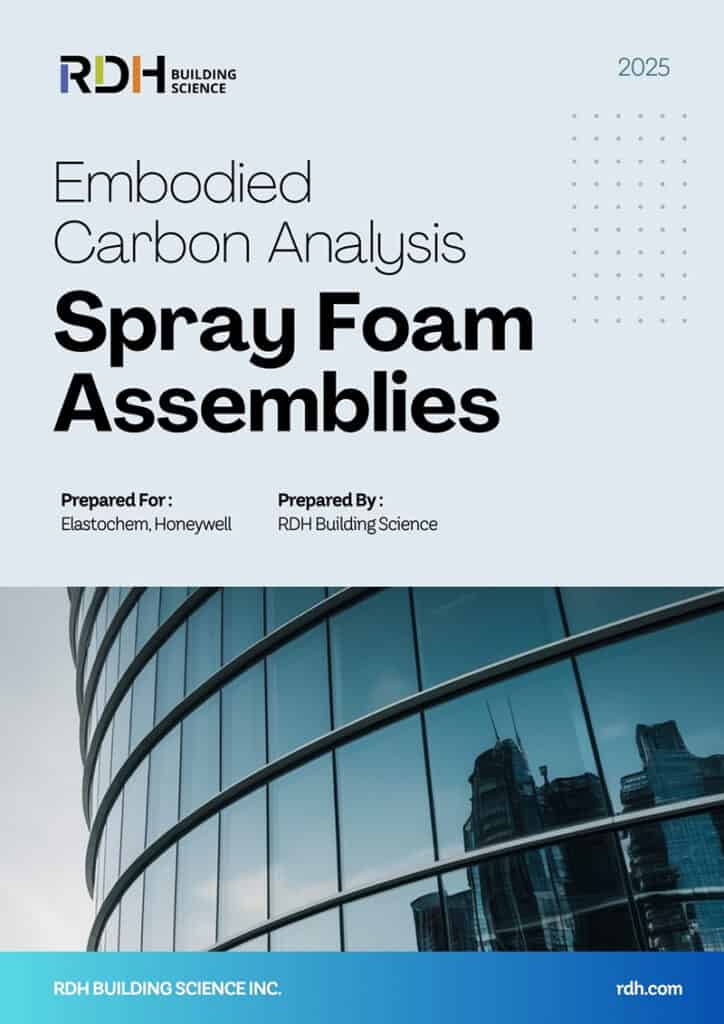
Embodied Carbon Analysis for Spray Foam Wall Assemblies
About the report
Prepared by RDH Building Science for Elastochem and Honeywell, this study compares Canadian and U.S. exterior wall assemblies using open and closed-cell spray foam and other common insulation types, outlining embodied carbon results by assembly and life-cycle stage.
Get the Embodied Carbon Report
LOW CARBON SPRAY FOAM
Choose Insulthane® Extreme for low carbon enclosures
Insulthane® Extreme closed-cell spray foam helps reduce material use, transportation demands, and installation waste to support lower environmental impact from day one.
Join us for a Lunch & Learn
Join us for a Lunch & Learn covering embodied carbon, spray foam insulation, and smarter enclosure design choices.